

Dining Table Decoration in Bangladesh: Modern Tablescape Ideas for Hosting
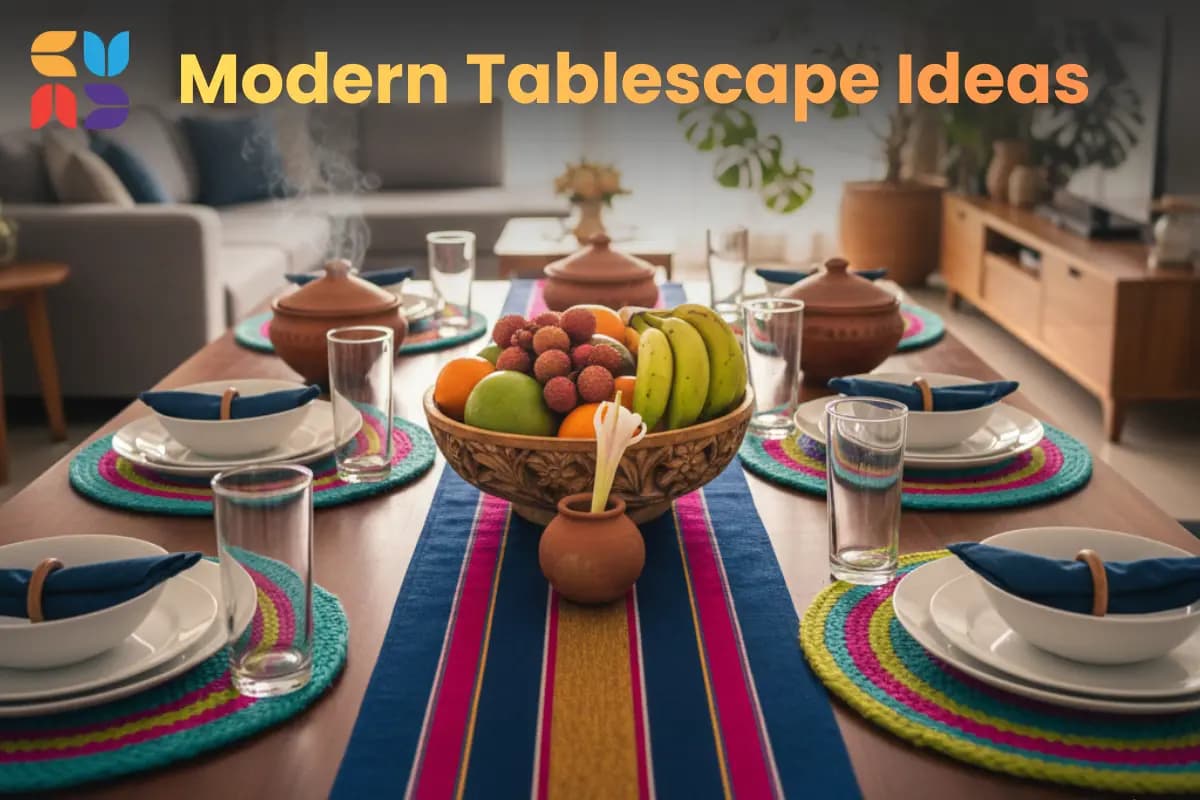
Have you ever wondered why some dinner tables in Gulshan or Banani look amazing while others feel plain?
The secret is not expensive imported china. The secret is the Tablescape.
Whether you are hosting a casual family lunch or a grand Eid Dawat, a beautiful table makes food taste better. It makes your guests feel special.
In this guide, we will master the art of dining table decoration in Bangladesh. We will focus on the two most important tools: Placemats and Table Runners.
Here is how to create a stunning look that blends modern style with our warm Bengali hospitality.
What is a "Tablescape" (And Why Does It Matter)?
A tablescape is the art of arranging your dining table. It combines textiles (runners, mats), dinnerware (plates, glasses), and decor (centerpieces).
Why bother?
The "Dawat" Factor: In our culture, feeding guests is a love language. A decorated table shows respect.
Protection: It protects your valuable Segun (Teak) or Mehogoni wood table from heat marks and curry spills.
Mood: It turns a regular Friday lunch into a celebration.
Placemats vs. Table Runners: What Do You Need?
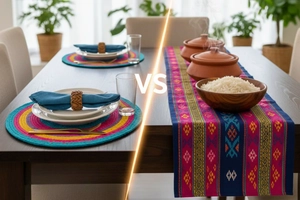
Many hosts in Dhaka get confused. Do you use one? Both?
Here is the breakdown.
The Design Rules:
Runner Only: Perfect for daily use to keep serving dishes.
Placemats Only: Great for quick breakfasts.
Layered (Both): The standard for a formal dinner or party.
Step-by-Step: Setting the Table for a Bengali Feast
Creating a stunning table is like building a house. Follow these steps.
Step 1: The Foundation (Bare Wood vs. Cloth)
Most Bangladeshi homes have beautiful wooden tables.
Trend Alert: In 2025, the trend is to show the wood. Skip the full tablecloth. Use a runner to highlight the grain of the wood.
If using a cloth: Choose a neutral color (Cream or White) so your food stands out.
Step 2: The Runner (The "Hot Zone")
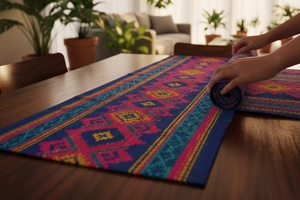
The runner creates the center line.
Function: In Bangladesh, we serve food on the table. The runner acts as a heat-proof zone for your hot pots and bowls.
Material: Choose a Jute Runner. It is thick, heat-resistant, and naturally elegant.
Step 3: The Zones (Positioning Placemats)
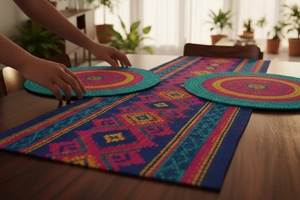
Spacing: Place mats so guests have elbow room.
Crowd Control: If you are squeezing extra cousins onto the table, use Round Placemats. They take up less visual space than rectangular ones.
Step 4: The Hardware (Plates & Cutlery)
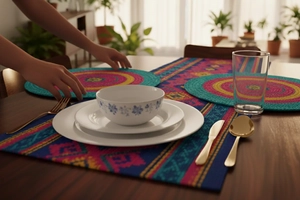
Layering is the secret to a "Pinterest-worthy" look.
Dinner Plate: The base for the meal.
Quarter Plate/Bowl: Place a small bowl on top for dal or soup.
Glasses: Place the water glass to the right.
Tip: If you are serving "Bhorta-Bhat," keep it simple. If it's a continental dinner, bring out the cutlery.
Step 5: The Centerpiece (Keep it Low)
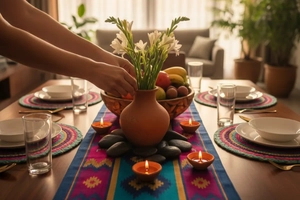
This is the finishing touch.
The Rule: Keep flowers or candles low. You want to see your guests across the table to chat.
Local Touch: Use a clay pot with Tuberoses (Rajanigandha) or a wooden bowl with fresh fruits.
3 Styles to Copy for Your Next Party
1. The "Deshi Organic" (Eco-Friendly)
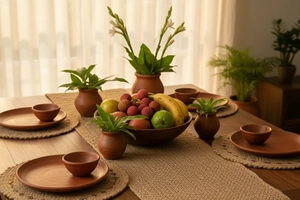
Perfect for Pohela Boishakh or a traditional lunch.
Base: Bare wood table.
Textiles: A natural Jute Runner with matching Jute Placemats.
Decor: Earthenware (Matir bank) and fresh green leaves.
Vibe: Warm, earthy, and authentically Bengali.
2. The "Modern Minimalist"
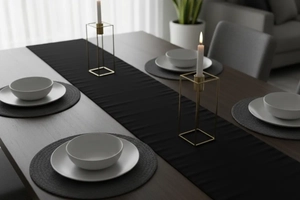
Clean lines for a sophisticated dinner.
Base: A crisp white or black runner.
Textiles: Simple woven mats in grey or charcoal.
Decor: Geometric candle holders. No clutter.
Vibe: Sophisticated and sleek.
3. The "Festive Eid" Layer
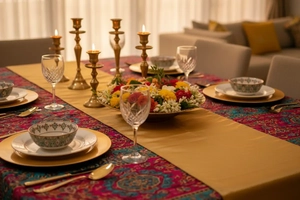
Rich and colorful.
Base: A Block-Print Tablecloth.
Textiles: A solid gold or cream runner on top.
Decor: Brass candle stands and fresh flowers.
Vibe: Luxurious and celebratory.
2026 Trend Watch in Dhaka
Home decor in Bangladesh is shifting back to our roots.
Sustainable Materials: Plastic mats are out. Biodegradable materials like Jute, Seagrass, and Handloom Cotton are in.
Artisan Made: People want items that tell a story, like Nakshi Kantha runners or Jamdani accents.
Biophilic Design: Bringing nature indoors with natural fibers and greenery.
Your Tablescape Shopping Checklist
Ready to upgrade your dining room? Start with these essentials from Kaaruj.
1 Jute Runner: (Heat resistant and stylish)
6-8 Placemats: (Woven texture hides turmeric stains best!)
Cloth Napkins: (Eco-friendly and washable)
Wooden Serving Tray: (For organizing condiments)
Make Every Meal a Celebration
Learning how to set a table is not just about decoration. It is about hospitality.
When you lay down a runner and arrange the plates, you are creating a space for connection. You are telling your family, "This time matters."
Start with the basics. A simple jute runner can transform a regular rice-and-curry lunch into a dining experience.
Ready to transform your dining table? Shop the Hand-Woven Jute Collection at Kaaruj.
Frequently Asked Questions
What is the difference between a placemat and a charger?
A placemat sits on the table to protect it. A charger plate sits on top of the placemat to frame your dinner plate.2 In Bangladesh, chargers are mostly used for weddings or formal parties.
Can I use a runner on a round table?
Yes! You can place one runner across the center diameter. For a round glass table, a Round Jute Centerpiece often looks better than a long runner.
Is it okay to use placemats on top of a tablecloth?
Yes. This is called layering. It adds texture and, most importantly, protects your expensive tablecloth from stubborn food stains like oil and turmeric.
How do I clean jute placemats if curry spills on them?
Do not soak them! Blot the curry immediately with a paper towel. Use a damp cloth with a drop of soap to spot clean. Let it dry in the sun. Jute is naturally resistant to dirt.